Behind the glittering ceremonies and carefully staged appearances of the British monarchy lies a far more fragile reality. For generations, the royal institution has perfected the art of projection: dignity, stability, and near-mythical authority. Every handshake, every smile, every walk through a cheering crowd is part of a precisely engineered performance. But sometimes, even the most controlled stage collapses in an instant.
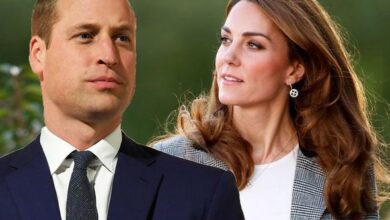
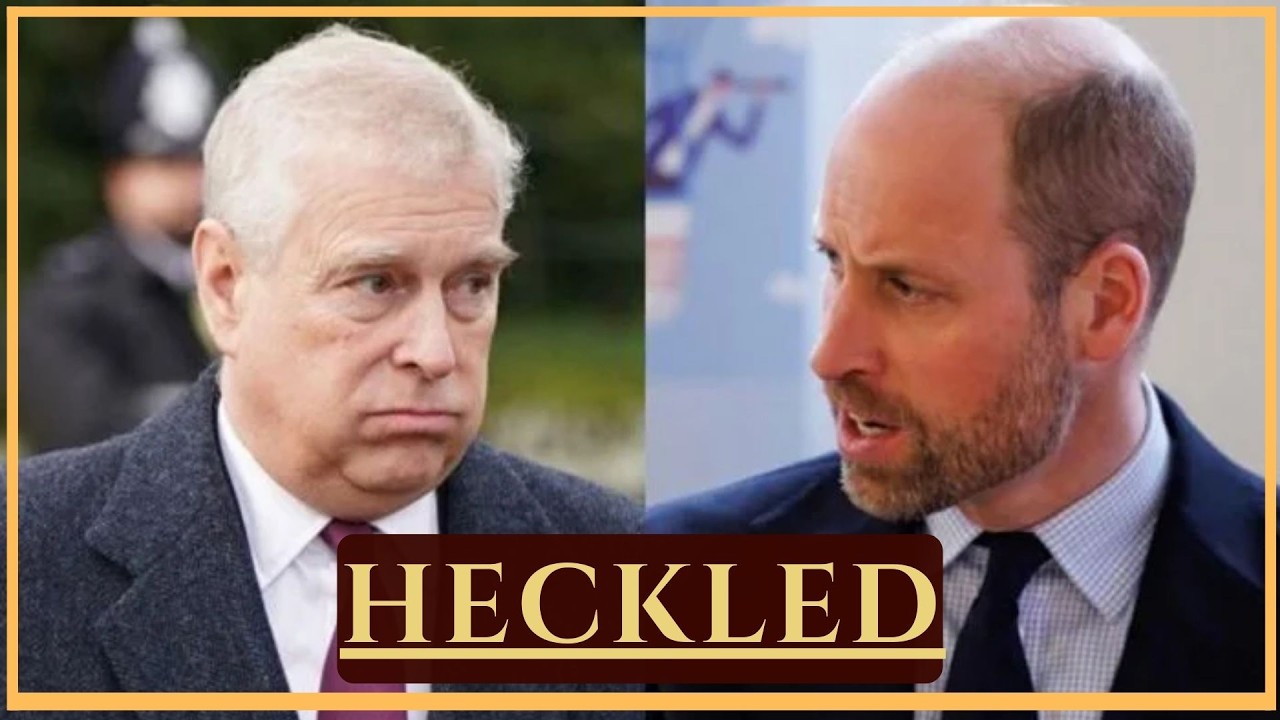
That moment may have arrived during a royal visit in Cornwall, when Prince William stepped into a crowd expecting the usual choreography of admiration. Instead, a single voice shattered the carefully constructed script. Someone shouted a name that has haunted the monarchy for years: Prince Andrew.
To an ordinary politician, a heckler might be little more than background noise. But for a future king, it is something far more dangerous. The British monarchy survives on an unwritten social agreement: the public grants it prestige and respect as long as the royal family represents moral authority and national unity. When the name of a disgraced royal linked to the scandal surrounding Jeffrey Epstein is shouted directly at the heir to the throne, that delicate agreement begins to fracture.
William’s reaction was telling. He smiled and continued moving through the crowd. But the smile, observers say, was not warmth—it was strategy. Responding could have turned a brief disruption into a global confrontation. Ignoring it, however, risks appearing distant or evasive. It was a perfect trap, a moment where every possible move carried consequences.

For the royal household, the deeper concern is not the shout itself but what it represents: the inability to control the narrative. For decades, scandals could be confined to newspapers and carefully managed statements. Now, in an age of smartphones and instant media, reality breaks through every barrier.
Meanwhile, another drama unfolds quietly at the Sandringham estate. King Charles III resides at the main residence, symbolizing continuity and stability. Just two miles away lives his brother, Prince Andrew, largely withdrawn from public life. In a normal family, such a distance would mean nothing. In royal strategy, it represents an enormous divide.
The king has reportedly avoided visiting his brother despite the short distance between them. The reason is not personal hostility but political calculation. Any photograph of the two together could instantly be interpreted as support for a man whose reputation remains deeply damaged.
In modern politics, perception can be more powerful than truth. A single image could trigger headlines suggesting that the crown is shielding someone associated with one of the most infamous scandals of recent decades.
The consequences extend even further within the royal family. The daughters of Andrew, Princess Beatrice and Princess Eugenie, now find themselves in an uncertain position. Their titles have always opened doors in elite circles—from diplomacy and charity work to global social networks. But their father’s controversies threaten to undermine the very prestige those titles represent.
For them, the stakes are not merely symbolic. In a world where royal identity functions like a powerful brand, losing that connection could mean losing influence, opportunity, and relevance.
History shows that the House of Windsor has survived countless crises by reinventing itself. Queen Victoria reshaped the monarchy into a symbol of family values during the 19th century. Later, Queen Elizabeth II perfected a different strategy: silence and patience, allowing controversies to fade over time.
But today’s world moves too quickly for silence to work. Every controversy spreads instantly across global networks, making it impossible to hide uncomfortable truths.
As a result, Charles appears to be pursuing a far harsher strategy: distancing the institution from any figure who threatens its legitimacy—even if that person is his own brother.
The British monarchy has endured wars, revolutions, and political upheaval for centuries. Yet the greatest challenge it now faces may be far more modern: the relentless transparency of the digital age.
And with every public appearance, Prince William must step forward knowing that the past may follow him—one voice in the crowd away from breaking the illusion again.
 Hanni
Hanni