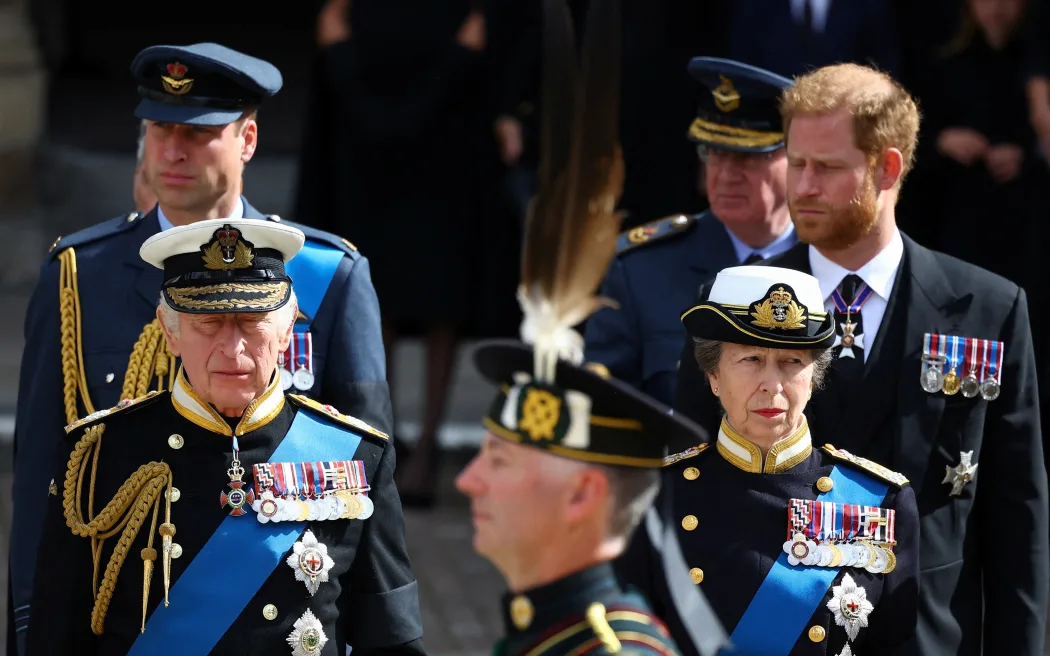
Today marks a poignant anniversary. Three years ago, on September 8th, 2022, the world mourned the passing of Her Majesty Queen Elizabeth II—a monarch whose seven decades of service defined stability, grace, and devotion. As the nation pauses to reflect, her son, King Charles III, not only honors her memory but also confronts his own complicated legacy: his lifelong, and often controversial, fight for the environment.
A Son’s Tribute
On this solemn anniversary, Buckingham Palace released an evocative photograph of Queen Elizabeth II accompanied by a caption both simple and profound: “Remembering Queen Elizabeth II, 1926–2022.”
For Charles, this was not just a ceremonial gesture. It was the reminder of a personal loss that reshaped his life and marked the beginning of his reign. Behind the public tributes lies the weight of a son still grieving a mother, while stepping fully into a role he had waited his entire life to assume.
The Queen’s Rule of Silence vs. Charles’s Voice
Queen Elizabeth II was renowned for her unshakable neutrality. Through wars, scandals, and cultural revolutions, she never wavered from her principle: the crown must never meddle in politics. Her silence was her strength.


But King Charles has always been different. Long before he wore the crown, he was outspoken—sometimes uncomfortably so for the palace—on issues he believed were existential for humanity. Climate change, organic farming, biodiversity, architecture—these were not passing causes, but passions that drove him to act.
Even as Prince of Wales, Charles was not content to watch quietly. He penned letters—famously dubbed the “black spider memos” because of his spidery handwriting—to government ministers. These notes urged action on farming, conservation, and even badger welfare. His fervor was genuine, but within the palace it caused alarm.
One royal aide confessed in Valentine Low’s Power and the Palace: “He sometimes got ahead of the skis.” Translation: Charles was moving too fast, too boldly, risking the monarchy’s reputation for impartiality.
The Queen’s Warning
The late Queen’s guidance was blunt. “Just don’t do it.”
Those four words revealed her deep concern—that her heir’s activism, however noble, could damage the monarchy’s carefully protected neutrality. Even Princess Anne and Prince Andrew reportedly found Charles’s zeal “naïve,” worrying he underestimated the political storm his letters could provoke.
The Monarch He Has Become
Now, as sovereign, Charles faces the ultimate balancing act. He has tempered his activism, shifting from direct lobbying to subtle diplomacy. Instead of pushing ministers, he now convenes world leaders, using his influence not to interfere but to inspire.
His tribute to his mother reminds us of the continuity between monarchs—Elizabeth’s quiet restraint alongside Charles’s passionate convictions. The question that lingers is whether his unique blend of tradition and advocacy will strengthen the monarchy in a modern world, or test its limits.