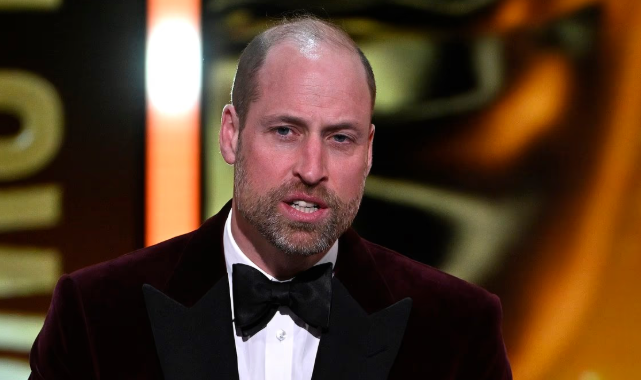
“I Need to Be Calm to Watch This” — Prince William’s Words Signal a Monarchy in Crisis
“I need to be in quite a calm state to watch this — and I’m not at the moment.”
The words stunned reporters. Spoken softly by Prince William, a man raised to embody restraint and emotional discipline, they were not part of any prepared statement. They were raw, unguarded — and deeply revealing. In that brief confession, the future king of Britain exposed the strain now gripping the House of Windsor.
The moment came on the red carpet of the British Academy Film Awards, an event usually drenched in glamour and celebration. But on Sunday evening at London’s Royal Festival Hall, something felt different. When William and Catherine stepped into the spotlight, the cameras weren’t searching for fashion details. They were searching for cracks.
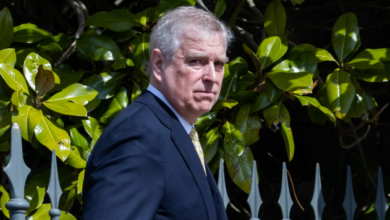
This was their first major public appearance since a seismic shock hit the royal family just three days earlier: the arrest of William’s uncle, Andrew Mountbatten Windsor.
William’s admission — that he was not in the right headspace to absorb an emotional film — spoke volumes. For a senior royal, such honesty is rare. For an heir to the throne, it was extraordinary. It signaled that the crisis was no longer contained behind palace walls.

And while emotions were visible on the red carpet, a colder, more irreversible process was already underway in Westminster. For the first time in generations, serious political momentum is building to permanently remove Andrew from the line of royal succession. This is no longer a tabloid scandal. It is a constitutional reckoning.
Just 72 hours before William faced the cameras, his uncle had been detained by police at Wood Farm on the Sandringham estate — uncomfortably close to Anmer Hall, where William and Catherine were spending the school break with their children. The symbolism was brutal: the law arriving at the doorstep of royal privacy.
The allegations are severe. Andrew is suspected of misconduct in public office, linked to claims that confidential trade documents were shared with the late Jeffrey Epstein during Andrew’s time as the UK’s trade envoy. Though released under investigation and denying wrongdoing, the damage is already profound.
King Charles III has responded cautiously but firmly, emphasizing respect for due process and making clear there will be no royal interference. The separation between the Crown and Andrew — now officially a private citizen — has hardened into steel.
But Parliament is not waiting. Across party lines, voices are calling for decisive legal action. Public opinion is overwhelming. A recent YouGov survey shows that 82% of Britons believe Andrew should be removed from the succession. In a monarchy that survives by public consent, such numbers are impossible to ignore.
The last comparable rupture was the abdication crisis of 1936. But that scandal was rooted in love. This one is rooted in law, trust, and accountability.
As Prince William stood on the BAFTA carpet, visibly subdued, he was not simply attending a cultural event. He was witnessing the slow dismantling of a royal certainty he was born into. His rare vulnerability may mark the beginning of a different monarchy — one no longer untouchable, no longer silent.
The era is changing. And the Crown knows it.