He never got to blow out the candles.
On the morning of his 66th birthday, Prince Andrew did not wake to family, gifts, or celebration. Inside the quiet isolation of Wood Farm on the Sandringham Estate, the silence was shattered by a heavy knock. It was not well-wishers at the door. It was the police.
What followed was not just an arrest. It was the coldest message the British monarchy has delivered in generations: blood no longer comes before survival.
On February 19, 2026, unmarked vehicles arrived without ceremony. Plain-clothes officers from Thames Valley Police detained the man once known as the Duke of York, while simultaneous searches unfolded at properties linked to him. Within hours, images flooded the world’s media—not of a prince, but of a broken figure, hollow-eyed, driven away from a police station as headlines screamed Downfall.

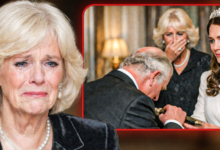
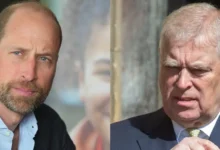

For more than ten hours, Andrew sat in an interrogation room on his birthday. Gone was the entitlement. Sources say his initial disbelief—“Do you know who I am?”—quickly dissolved into silence as investigators laid out the case: suspected misconduct in public office.
At the heart of the investigation lies his former role as UK trade envoy and allegations that, in 2010, confidential government trade information was shared with Jeffrey Epstein. Newly released U.S. Justice Department documents appear to have reignited the inquiry—documents the public was never meant to see.
Then came the moment that froze the palace.
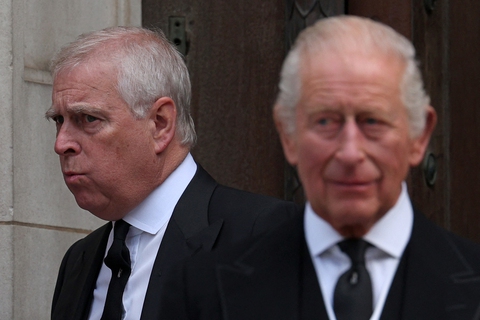
Within four hours of the arrest, King Charles III issued a statement. He did not say “my brother.” He did not say “His Royal Highness.” He said Andrew Mountbatten Windsor. In royal language, that choice was devastating. It stripped Andrew of identity, protection, and illusion.
“The law must take its course,” the King declared—confirming full cooperation with authorities. No intervention. No shielding. The firewall was absolute.
Equally telling was the silence from Prince William and Catherine. Their message, delivered quietly through aides, was unwavering support for the King. No sympathy. No softening. In William’s vision of the future monarchy, liabilities are removed—no matter the surname.
The personal fallout is brutal. Andrew’s daughters, Princess Beatrice and Princess Eugenie, are said to be devastated, retreating from public view as their father’s disgrace consumes global headlines.
That evening, while Andrew returned to Wood Farm under investigation, the King attended London Fashion Week—smiling, composed, unmoved. The message could not have been clearer: the Crown does not pause.
History may remember February 19, 2026, as the day the British monarchy proved it is no longer a family first. It is an institution first. And institutions survive by cutting away what threatens them.
Andrew is no longer a prince to the Crown. He is a risk.
And in the modern monarchy, risks are eliminated.