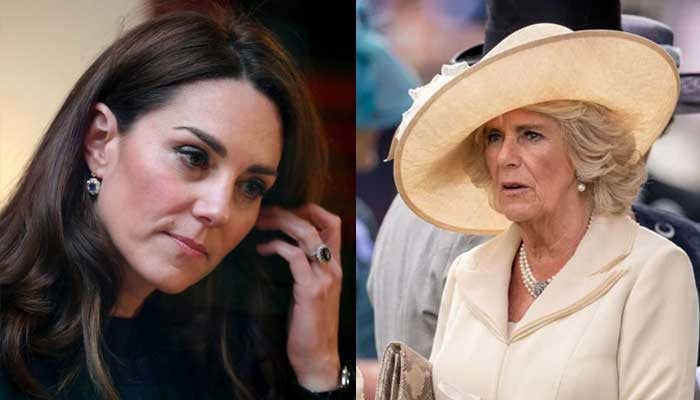
Could the most dangerous threat to the Princess of Wales be coming not from hostile headlines, but from inside her own trusted circle? A chilling warning now hangs over Catherine, Princess of Wales, after a single magazine cover sent shockwaves through royal corridors and ignited fierce debate across Britain.
The controversy erupted following a high-profile Times magazine feature boldly titled “Arise, Queen Kate.” On the surface, it appeared to be a glowing tribute—an exploration of Catherine’s future role and the quiet strength she is expected to bring to the monarchy when Prince William one day ascends the throne. Friends and palace insiders spoke warmly of her preparation, her discipline, and her vision. Yet in the tightly controlled world of royal protocol, timing is everything—and this timing could not have been worse.
King Charles III is currently undergoing cancer treatment, bravely continuing his duties under intense public scrutiny. Queen Camilla has stepped forward as a steady pillar, carrying an exhausting schedule to keep the monarchy visible and united. Against this fragile backdrop, a magazine effectively heralding the next queen was seen by critics as tone-deaf at best—and deeply disrespectful at worst.
The backlash was swift. Veteran royal commentator Amanda Platell delivered a stark warning to Catherine, suggesting the real danger may lie with those closest to her. Her words were brutal: “Be careful, Kate. Your inner circle may have inadvertently stabbed you in the back.” The phrase struck a nerve, raising unsettling questions. Did Catherine approve her friends speaking so openly? Was the article sanctioned—or did trusted allies go rogue?



If the feature was authorized, it risks portraying Catherine as impatient or prematurely positioning herself above the current Queen. If it wasn’t, the implications are perhaps more alarming: a future queen losing control of her own narrative, while confidants trade private insight for media attention.
What makes the situation even more explosive is Catherine’s own health journey. Still recovering from serious medical treatment, she has repeatedly emphasized that her priority is her family and healing—not future titles. That reality makes it hard to believe she would willingly endorse an article dissecting her reign before it has even begun.
Royal history offers a sobering lesson. Again and again, inner circles have proven to be the source of damaging leaks, blurred loyalties, and unintended betrayals. The crown does not tolerate campaigns, only patience and duty. Even praise, when poorly timed, can feel like ambition.
For Catherine, whose public image has long been defined by restraint, respect, and quiet strength, this episode is more than a media storm. It is a warning shot. As she moves closer to the throne, trust may become her most precious—and most dangerous—currency.
One thing is certain: in the royal world, silence is often safer than celebration, and loyalty is measured not by words spoken—but by those left unsaid.