Royal titles do not grant immunity. They magnify accountability. And when identity becomes a commodity, consequences follow.
In early December 2025, an unannounced package arrived at Kensington Palace. It was discreet, elegant, and unmistakably symbolic. Inside was a one-of-a-kind Dior couture clutch, delicately embroidered with the initials “HR,” accompanied by a handwritten note from Dior’s creative director, Maria Grazia Chiuri. The message praised Catherine, Princess of Wales, as a woman who embodied quiet strength, cultural continuity, and timeless grace.
There was no press release. No contract. No campaign.
Just intention.



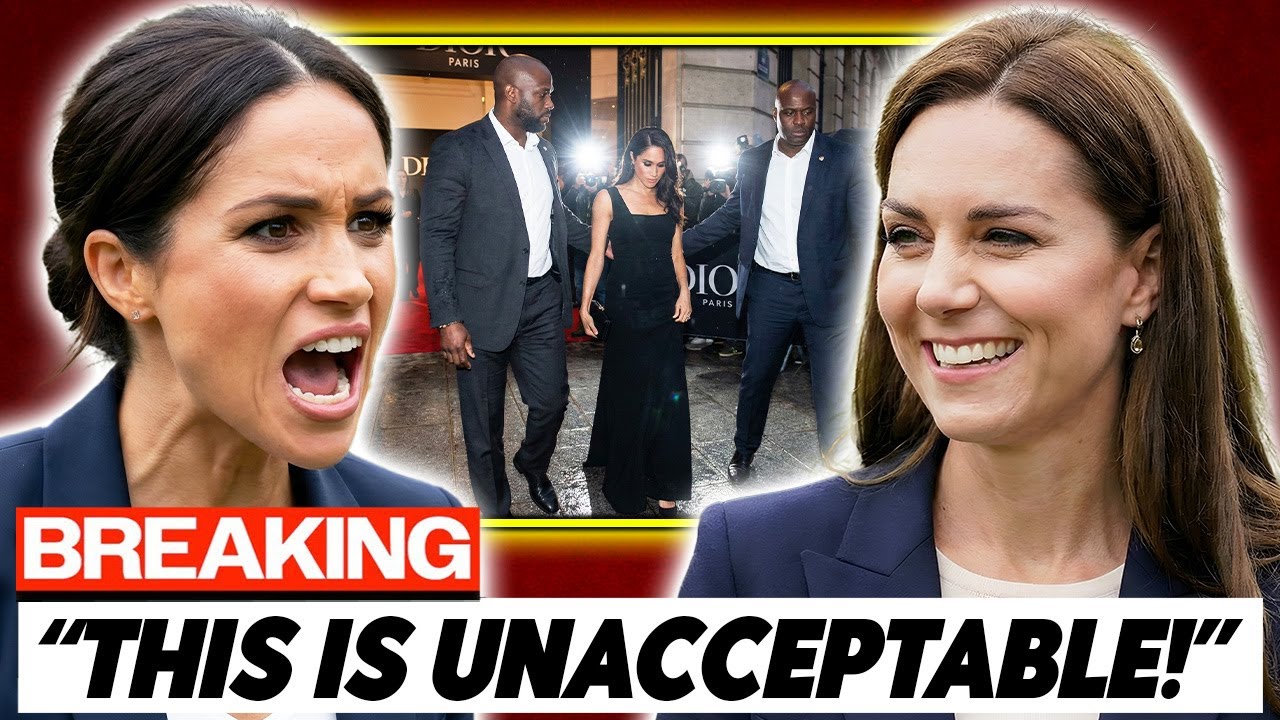
Within days, however, what began as a private tribute ignited one of the most quietly explosive confrontations in modern royal branding. Less than 48 hours later, Meghan Markle arrived in Paris seeking access to the same fashion house. Her team reportedly requested a couture fitting, implying prior arrangements. Dior’s response was polite—but firm. No appointment existed. No invitation had been issued.
The doors did not open.
Behind the scenes, Dior executives had already rejected multiple proposals positioning Meghan as the “modern heir” to Princess Diana’s global legacy. Internal concerns cited reputational risk, misalignment with Dior’s heritage strategy, and discomfort with turning royal symbolism into commercial spectacle. As one insider allegedly put it: “We dress legends. We don’t manufacture them through controversy.”
When online speculation suddenly suggested a Dior-Meghan collaboration, investigators traced the posts to coordinated PR networks. Dior responded with surgical precision: “No current or planned partnership exists with the Duchess of Sussex.” In the language of couture, that was the final curtain.
Catherine’s response stood in stark contrast. Through palace channels, she thanked Dior for the gesture—but declined any commercial association, honoring her non-commercial role. Days later, when asked about public comparisons, she delivered a line that echoed far beyond the room: “Titles are not licenses. They are obligations.”
The message landed.
Clarence House soon reinforced the boundary: only active working royals may represent or monetize royal identity. The implication was unmistakable. In fashion circles, momentum shifted instantly. Invitations cooled. Brand doors quietly closed. Meanwhile, Catherine continued her work—visiting charities, supporting artisans, wearing heritage fashion without comment or promotion.
The contrast became unavoidable.
One woman pursued visibility. The other embodied continuity. One chased legacy. The other protected it.
In the end, Dior chose silence over spectacle. And silence, as it turned out, spoke the loudest of all.
Legacy, after all, is not something you claim.
It’s what remains when you don’t have to ask for attention.